
Sections:
- What is Cholesterol?
- What is the difference between Hyperlipidemia & Hypercholestermiea?
- Mechanism of atherogenesis & unstable plaques
- Understanding LDL, HDL & TG in the standard lipid panel
- Advanced Lipid Panel
- Dieting & Exercise Recommendations
- How Mediterranean, DASH & Vegan Diets can help
- How much exercise (eg 150 mins & body resistance exercise 2 dyas/wk)
- Medical therapy
- Statins
- Bempedoic Acid
- PCSK9 inhibitors
- Inclesiran
What is cholesterol & what does it do?
Cholesterol is a waxy, fat-like substance your body uses to build cells and to make hormones. Your body needs some cholesterol, but having too much in your blood increases the risk of heart disease and stroke.
Hyperlipidemia refers to having abnormally high levels of fats, such as cholesterol and triglycerides, in your blood. Hypercholesterolemia is a subset which identifies the elevated cholesterol levels while ignoring triglyceride amounts.
Cholesterol comes from two sources. Your liver makes all the cholesterol you need. The rest of the cholesterol in your body comes from animal food products. For example, meat, poultry and dairy products all contain dietary cholesterol.
Why does cholesterol matter?
Cholesterol travels through your blood, and when levels increase, your risk of atherosclerotic cardiovascular disease goes up. With high cholesterol, fatty substances can build up in blood vessels called arteries. When cholesterol is elevated, it can join with other substances to create plaque deposits on the inside of the arteries. This gradually narrows blood vessels and makes arteries less flexible — a condition known as atherosclerosis.
The cholesterol fat buildup in the vessel wall is called plaque & as more forms, the arteries can become narrowed.
With poor blood flow to the heart muscle, persons can experience chest discomfort (angina). Reduced arterial blood flow to the legs can cause calf and thigh pain with walking (claudication). While poor cerebral blood flow can cause dementia and cognitive dysfunction. Over time, the restricted blood flow to vital organs increases the risk of heart attack, resting limb pains and stroke.
Types of Hyperlipidemia
- Primary Hyperlipidemia – In a minority of cases, high cholesterol can be inherited and is often referred to as ‘Familial Hyperlipidemia’. Genetics play a role, meaning you may develop high cholesterol even with a healthy lifestyle. This inherited condition makes it harder for the body to remove LDL “bad” cholesterol from the blood.
- Secondary Hyperlipidemia – Often, high cholesterol is the reulst of lifestyle choices. Not getting enough exercise and unhealthy diets with excessive consumption of saturated fats can lead to obesity, diabetes and metabolic syndrome.
Both types can be effectively managed with a combination of lifestyle changes and sometimes medical intervention.
Getting your cholesterol tested helps you understand your levels and protect your heart health.
Atherosclerosis (The Mechanism of Plaque Buildup)
Atherosclerosis is the buildup of cholesterol and other substances in the artery wall with subsequent blood vessel narrowing. Over time, narrowed arteries can increase the risk of blood clots, heart attack, angina, stroke, transient ischemic attack,
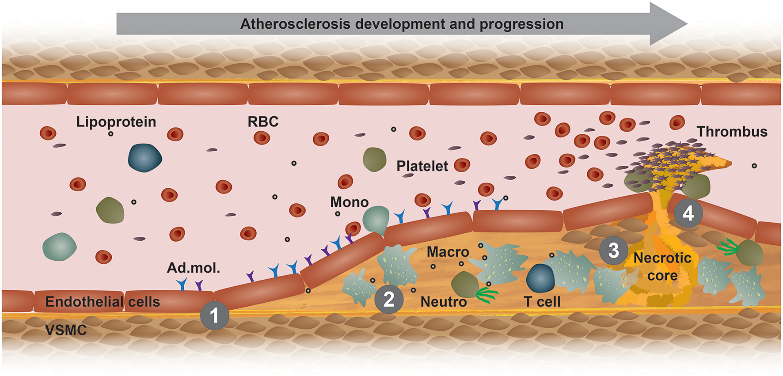
peripheral artery disease, and aortic aneurysm.
When there are too many LDL particles or when the artery lining is stressed by smoking, high blood pressure, diabetes, inflammation, or aging, particles can enter the inner layer of the artery wall. The immune system responds with white blood cells engulfing the LDL particles to become foam cells. Following development of a fatty streak, the inflamed area evolves into a plaque with a lipid core & fibrous cap.
The majority of these plaques are stable causing chronic coronary artery disease. Unstable plaques are characterized by a large lipid core, presence of inflammatory white cells & thin fibrous cap. When a fibrous cap ruptures, the material inside the plaque is exposed to the bloodstream & this triggers clot formation leading to a heart attack or stroke.
Lipoproteins
Cholesterol travels through the blood, attached to proteins. This mix of proteins and cholesterol is called a lipoprotein. There are various types of cholesterol. The types are based on what the lipoprotein carries.
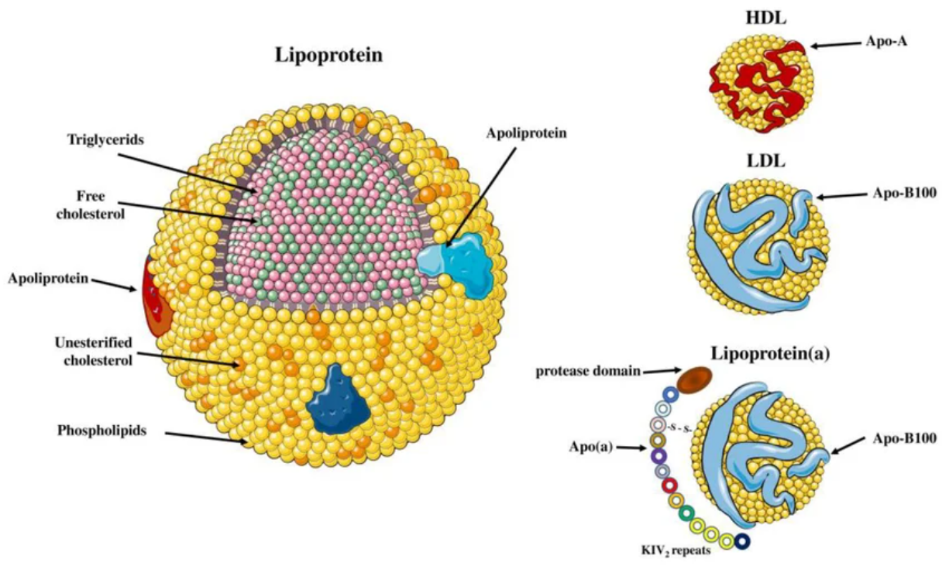
The two types of cholesterol are: LDL cholesterol, which is bad, and HDL, which is good. Too much LDL or too little HDL can contribute to plaque buildup in the arteries that supply your heart and brain.
When a gene change causes high cholesterol, the body has trouble removing LDL cholesterol from the blood or has trouble breaking down LDL in the liver.
LDL
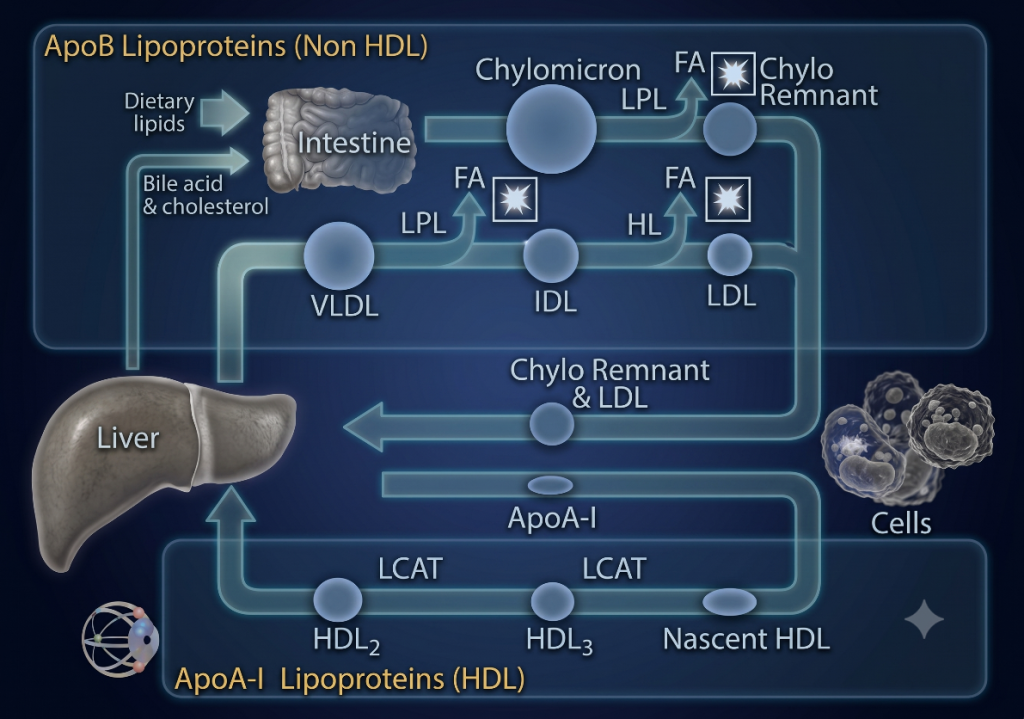
LDL cholesterol (LDL-c) is often called “bad” cholesterol because it can build up in arteries. LDL carries cholesterol particles throughout the body. This build up of “bad” cholesterol in the arterial wall makes the vessels hard & narrow. LDL-c assess the concentration of cholesterol. That is, it reflects the cholesterol mass within LDL particles rather than the number of atherogenic lipoproteins
What causes high LDL cholesterol?
- Family history of high cholesterol (e.g. familial hypercholesterolemia)
- Diet high in saturated fats
- Being less physically active
- Being overweight
- Tobacco use or exposure to secondhand smoke
For some people, an LDL goal may be below 100 mg/dL. For others, it may be 70 mg/dL or 55 mg/dL for people at very high risk of a heart attack or stroke.
HDL
Known as the “good” cholesterol, higher HDL levels may protect against heart attack & stroke. Think of HDL as your body’s clean up crew; transporting cholesterol away from artery walls and back to your liver, where it can be broken down and removed from the body. HDL does not eliminate all LDL, as only a fraction of the bad LDL cholesterol is carried by HDL.
HDL-c measures the total amount of cholesterol carried in HDL particles. Decreased HDL-c occurs in insulin resistance
Triglycerides
Triglycerides are the most common type of fat in the body. They store excess energy from your diet. High triglycerides can affect heart health, especially when combined with high LDL cholesterol or low HDL cholesterol. TG measures fat that has been exported from the liver in VLDL particles. TG values go up with insulin resistance as the liver exports fat?
Being physically inactive, smoking, drinking too much alcohol or eating a lot of refined carbohydrates, such as white flour or white rice, can affect triglycerides.
TG levels are not a primary treatment target for lowering heart disease or stroke risk. A triglyceride level below 150 mg/dL is usually considered normal.
Other causes of hyperlipidemia include:
- Chronic kidney or liver disease
- Diabetes
- Hypothyroidism
- HIV/AIDS
- Lupus
- Sleep Apnea
Symptoms
In the early stages, high cholesterol has no symptoms. A blood test is the only way to identify it.
Advanced Lipid Panel
| · Apolipoprotein B (Apo B)
· LDL particle number (LDL-P) / size · Lipoprotein (a) – Lp (a) · Small dense LDL · oxidized LDL |
· hs-CRP
· Fasting Insulin · HDL particle number (HDL-P) |
Lipoprotein (a)
Lp(a) particle is just an LDL cholesterol particle wrapped with an extra protein, apoprotein (a). The extra protein camoflauges the particle from the receptors in your liver [2].This extra protein makes Lp(a) both more inflammatory and more likely to promote clot formation than regular LDL. Lp (a) is 85% genetically determined & does not respond to diet and exercise nor statin therapy. About 20-30% of people have high levels of Lp(a).
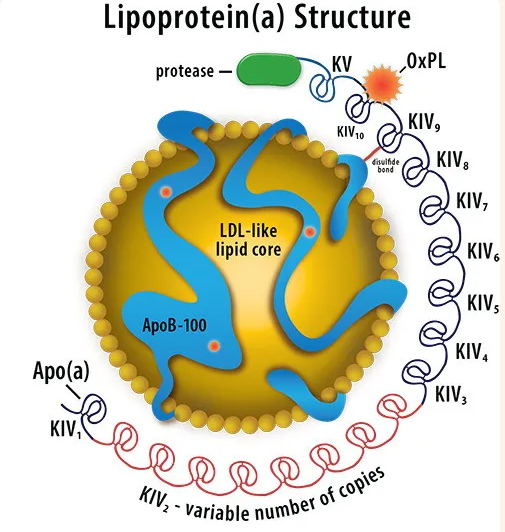
An Lp(a) concentration of 125 nmol/L (50 mg/dL) is considered high and is associated with approximately a 40% relative risk increase in ASCVD. Studies have found robust associations between high Lp(a) and nonfatal ASCVD outcomes, aortic valve disease, CVD, and all-cause mortality.
The association of Lp(a) with ASCVD risk is independent of LDL-C and other risk factors, even among individuals with low LDL-C
Apolipoprotein B (ApoB)
ApoB is the protein that wraps around every atherogenic lipoprotein particle, including LDL, VLDL, IDL, and Lp(a). Each of these particles carries exactly one ApoB molecule, and so it directly measures atherogenic particle number. That means measuring ApoB gives you a direct count of the total number of particles capable of depositing cholesterol in your artery walls. ApoB is a stronger predictor of cardiovascular events than LDL-C
ApoB is valuable in thoe with metabolic syndrome, insulin resistance or diabetes, conditions where LDL-C often underestimates true risk because particles tend to be smaller and more numerous. The patten of normal LCL-C levels with elevated apoB is commonly seen in those with ASCVD, CKM syndrome, DM and TG ≥150 mg/dL
In such scenarios, apoB serves as a more reliable marker for ASCVD risk and therapeu tic guidance
ApoB testing is more clinically useful for some as it is more widely available & less expensive. It identifies residual CVD risk in statin treated populations, including those who have achieved LDL-C goals. ApoB is unaffected by fasting
LDL Particle Size
Patterns A & B refer to the size of the LDL particels in blood.
Type B Pattern:
- Predominantly small & dense LDL particles. Some believe that the smaller LDL particles are more dangerous because they can easily squeeze through the tiny gaps in the endothelium. Pattern B is typically associated with high TG levels & low HDL levels. These patients are more likely to be diabetic and often have high TG levels atfter a fatty meal.
- Increased consumption of carbs and simple sugars promote a Type B pattern
Type A Pattern:
– Pattern A is defined by large buoyant LDL particles.
- Increased consumption of saturated fat promote a Type A pattern
High-Sensitivity C-Reactive Protein (hsCRP)
Atherosclerosis is fundamentally an inflammatory disease. The plaques that rupture and cause heart attacks are typically inflamed plaques, characterized by immune cell infiltration and structural instability. You can have significant plaque burden with low inflammation (relatively stable), or modest plaque with high inflammation (dangerous).
High-sensitivity CRP is a marker of systemic inflammation produced by the liver. While it’s not specific to the cardiovascular system (it rises with any inflammatory process), elevated hsCRP in the absence of obvious infection or inflammatory disease suggests ongoing vascular inflammation.
A patient with borderline lipids but persistently elevated hsCRP may warrant more intensive intervention than their cholesterol alone would suggest.
Diet & Exercise Recommendations
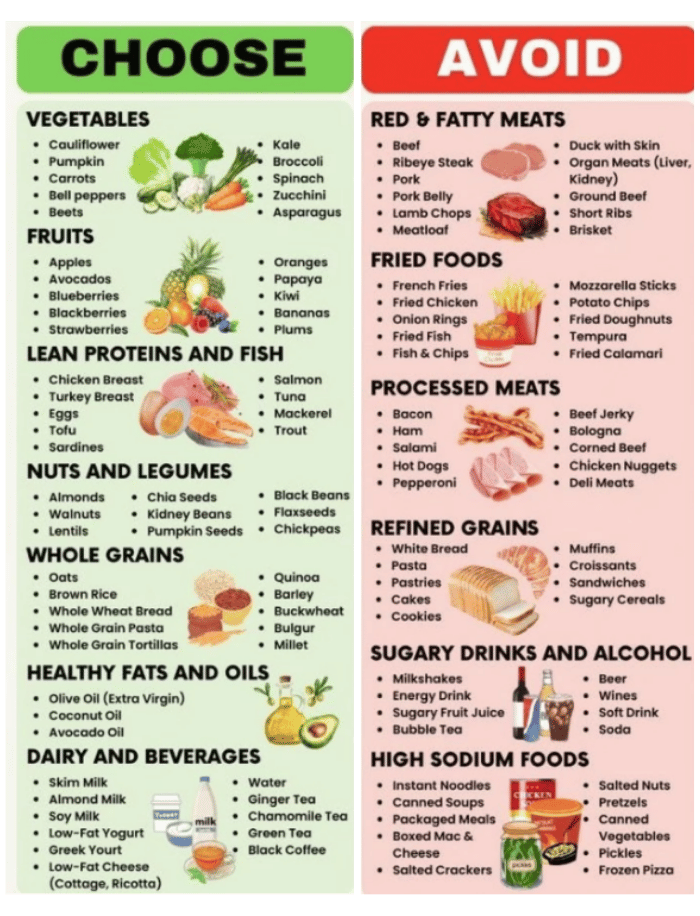
You have the power to change your cholesterol levels through daily habits!
- Heart-Healthy Diets:
- Mediterranean Diet: Focuses on healthy fats (olive oil, avocados), fish, nuts, and whole grains. It drastically reduces inflammation.
- DASH Diet: Created to stop high blood pressure, this diet is rich in fruits, vegetables, and low-fat dairy, and limits sodium and saturated fats.
- Vegan/Plant-Based Diet: By eliminating all animal products (meat and dairy), you naturally eliminate all dietary cholesterol, which can significantly drop your bad cholesterol.
- Exercise Goals: Aim for 150 minutes of moderate aerobic exercise per week (like brisk walking, cycling, or swimming—roughly 30 minutes, 5 days a week). In addition, add body-resistance/strength training (like lifting weights or using resistance bands) at least 2 days a week to improve your body’s ability to process fats and sugars.
Medical Therapy
Medication is considered when lifestyle alone is unlikely to get someone to goal
These medications help lower LDL cholesterol. Some can be taken with a statin to lower LDL even more.
- Statins lower LDL by reducing cholesterol production in the liver. Statins are often the first medication recommended to lower LDL. Statins also calm inflammation in the blood vessels. Examples include atorvastatin, rosuvastatin, and simvastatin.
- Ezetimibe prevents cholesterol from being absorbed in the intestines. It is the most commonly used non-statin medication to lower LDL cholesterol.
- PCSK9 Inhibitors: (e.g., Repatha, Praluent) These are highly effective, self-administered injections (usually every 2 weeks). These monoclonal antibodies type lowers LDL cholesterol by binding to a protein made in the liver.
- Inclisiran: (Leqvio) A newer, groundbreaking injection given by your doctor just twice a year. It works genetically (using siRNA) to stop your liver from making a specific protein, resulting in a dramatic, long-lasting drop in bad cholesterol.
- Bempedoic Acid: A daily pill that works similarly to statins by blocking cholesterol production in the liver, often used if patients cannot tolerate statins.
- Bile acid sequestrants help the intestines to remove more cholesterol by binding bile acids. Some examples are cholestyramine, colesevelam and colestipol.
Triglyceride-Lowering Medications
These medications can lower triglycerides and may slightly lower LDL. When triglyceride levels are very high, lowering them can help prevent pancreatitis, a serious and painful swelling of the pancreas.
- Fibrates are especially good at lowering triglycerides and have a mild LDL-lowering effect. Common names are fenofibrate, fenofibric acid and gemfibrozil.
- Omega-3 fatty acids help lower high triglycerides in the blood. These require a prescription and are different from fish oil supplements. Examples include omega-3 acid ethyl esters and icosapent ethyl (IPE).
References:
https://www.ahajournals.org/doi/10.1161/CIR.0000000000001423
https://griffinconciergemedical.com/blog/optimal-heart-labs-apob-lpa-cardiac-biomarkers-guide/
https://www.heart.org/en/health-topics/cholesterol/hdl-good-ldl-bad-cholesterol-and-triglycerides