
So, you have been diagnosed with congestive heart failure. The diagnosis may sound alarming at first. Many hear the word “failure” and think the heart has stopped working, or that life as they know it is over. I would like to begin by reassuring you; heart failure (HF) does not mean that the heart has stopped. It means the heart is having difficulty keeping up with the body’s needs. Many CHF patients continue to live meaningful, enjoyable lives, provided they take the appropriate steps and follow certain principles. I have seen, in several cases, where recovery of heart function is possible.
Too often, when my colleagues or myself see newly diagnosed HF patients, we often do not have the time in clinic to explain the diagnosis and the reason why an assortment of medications is necessary. I have written this article to serve as a guide on what to expect on this new journey.
Incidence
Approximately 6.7 million Americans over 20 years of age have HF. About one-third of the adult US population is at risk for HF (Stage A) and the condition accounts for 45% of cardiovascular deaths. Unfortunately 24% (i.e. about 1 in 4 individuals) will develop HF in their lifetime.
What is Heart Failure
Heart failure doesn’t mean your heart has stopped working. It means it needs support. The heart is essentially a pump which consists of 4 chambers & is divided into a right & left side. In HF there is a supply demand mismatch where the heart is not keeping up with the demands of the body. That is, the muscles & organs of the body require oxygen & other nutrients on a regular basis and the heart is not keeping up with the body’s needs as well as it should. When this need is not met, then we develop fatigue & shortness of breath (SOB).
Normally, when the lower chambers of the heart relax, blood is pulled into these chambers, from the body on the right side & from the lungs on the left. It is then ejected into the periphery.
In heart failure, the ineffective pump is unable to push the received blood out to the rest of the body. As a result, excess fluid starts to build up “back up” on the lungs on the left side and in the legs on the right side. This explains why we feel short of breath and why leg swelling occurs.
What Causes Heart Failure?

Risk Factors:
- Age > 65
- Smoking
- Family history
- Processed foods / Inactive lifestyle
Systolic vs Diastolic HF
The left ventricle (LV) is the lower main pumping chamber of the heart. It receives freshly oxygenated blood from the lungs & pumps it out the body. The extent to which the heart is able to squeeze & pump out blood is called the “Ejection Fraction’. It tells us what percentage of blood the left ventricle pumps out with each heartbeat. A normal EF is 60% and anything 40% or less is considered HF.
Basically, there are 2 types of heart failure. The more commonly understood type is systolic HF where the LV cannot squeeze out enough blood (EF ≤ 40%).
In about 50% of HF patients, there is another kind of HF where the LV muscle has trouble relaxing. This is called HFpEF or diastolic HF. Here, even though the LV has no trouble squeezing & ejecting blood out to the body, the problem is that returning blood from the lungs is being continuously received into the LV. The thickened, stiff muscle wall of the LV is unable to accommodate this blood return by relaxing & expanding appropriately. Consequently, congestion occurs as fluid backs up in the lungs, abdomen & ultimately the legs.
Signs & Symptoms
Most symptoms typically develop gradually overtime. However, as the disease progresses, minor triggering factors such as excessive salt/water intake, infections or fast heart rates can trigger an exacerbation (or what we usually call decompensation). This can lead to a sudden worsening of symptoms prompting an emergency room (ER) visit. In the early stages, common symptoms include:
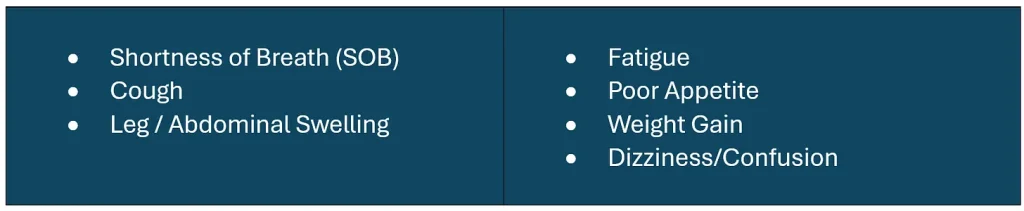
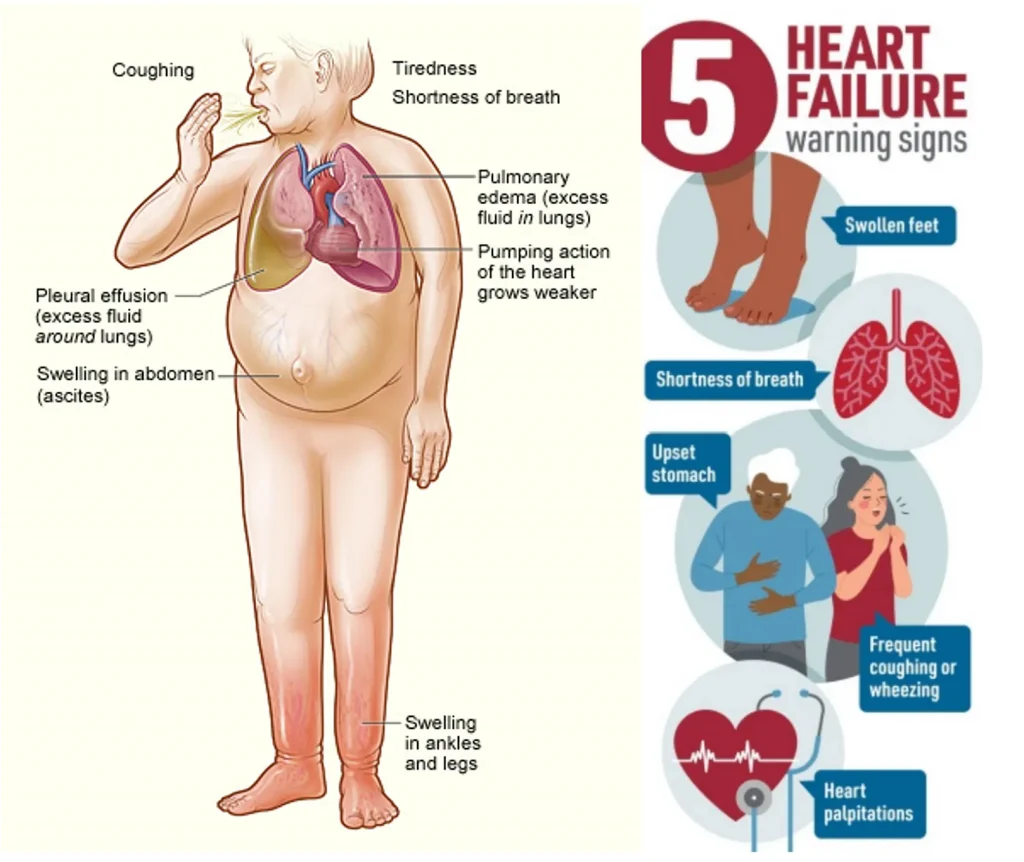
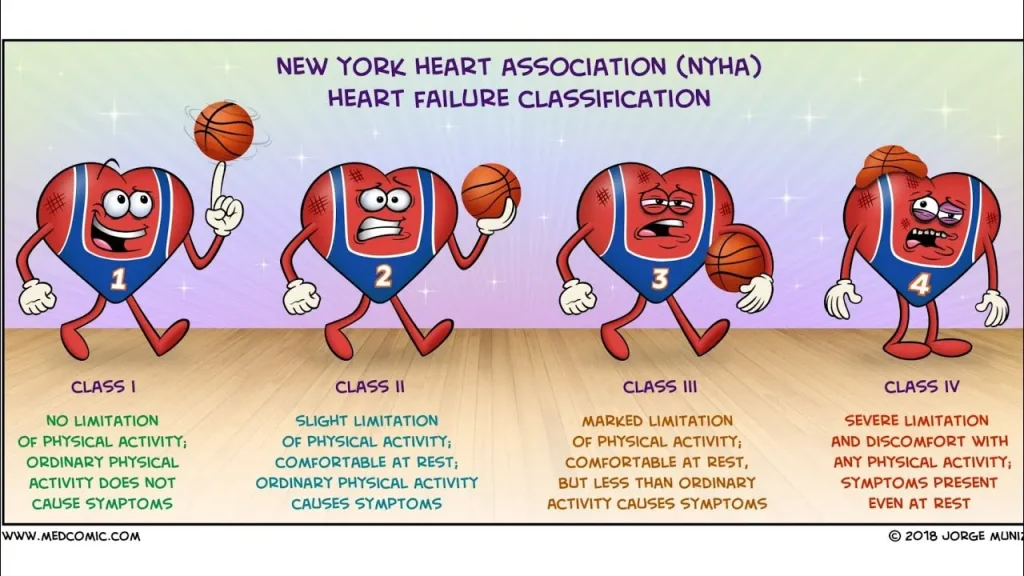
The shortness of breath (SOB) is initially insidious and many often think that they are just getting older or are out of shape. A common scenario is easy fatigability or breathlessness with showering or whenever bending over to tie shoelaces. We often use a functional classification system (NYHA Classes) to assess the extent of breathlessness with activity. When one notes exertional fatigue, palpitations, chest discomfort or difficulty breathing after walking either 2 blocks or climbing 1 flight of stairs, then this slight limitation in activity (NYHA Class 2) should prompt one to seek nonurgent care.
Breathlessness when lying flat with the need to sleep upright or waking up suddenly with SOB are particularly concerning symptoms which often indicate water backing up on the lungs.
Overall, the earlier we catch the fluid buildup, the easier it is to treat & in doing so we avoid the need for an emergency room visit.
Diagnostic Tests
Regular checkups with your healthcare provider are important, even if you’re not noticing any symptoms. We often run tests to figure out what is the cause of HF, the extent of fluid retention and the effects of HF on the liver and kidneys.
Blood test
Amongst others, one particular blood test we look for is the Brain Natriuretic Peptide (BNP). This gives us an idea of fluid retention and the risk of a potential HF admission. That is, what are the chances of decompensation resulting in a visit to the emergency room. Additionally, we focus on kidney function and potassium levels as these parameters may be affect by some of the medications we prescribe.
ECG
An electrocardiogram (ECG or EKG), checks the electrical activity of the heart. It may show rhythm problems such a atrial fibrillation or signs of a prior heat attack, all of which may contribute to HF exacerbation.
Echo
The echocardiogram is a particularly important test. Here, ultrasound waves are used to assess the structure of the heart, how well it moves & whether or not there are any valve problems. Of all the initial tests, getting this imaging study is probably the most important step as it helps us to determine how severe the condition is and allows us to plan what comes next.
Heart Cath / Stress Test / Cardiac CT
Coronary artery disease is frequently associated with heart failure. To determine the presence or extent of blockages in your coronaries, your doctor may order a stress test. In this study, while walking on a treadmill, a radioisotope is injected, followed by pictures of the heart being taken by a special camera. Some doctors may go straight to a heart catheterization or coronary CT angiogram. If any blockages are found, it is best to have a careful discussion with your cardiologist. This is because in the absence of angina or a major blockage in the main vessel at the root of the heart (left main), there is little to no evidence to prove that fixing such a blockage would reverse the HF & improve the pumping function of the heart. Nor does such intervention translate into an improved cardiac survival. That is, in many cases, there is no cardiac mortality benefit.
Lifestyle Management
Fluid Intake
Some patients with heart failure need to limit fluid intake. This depends on the severity of heart failure, kidney function and the type of medications they are on. You may be told to limit your water intake to 6-8 glasses per day (or less) (i.e. < 70 ounces or < 2 L per day). This is to prevent fluid build up which could lead to SOB. Remember that fluids mean more than just water. It may include coffee, tea, juice, milk, soda, soup, yogurt, pudding, ice cream etc (i.e. any form of liquid). Take care not to replace the fluid that diuretics are helping to get rid of.
Sodium Restriction
Salt is one of the biggest day-to-day issues in heart failure. Sodium causes the body to hold onto water. More water in the bloodstream means more fluid for the heart to handle. For a patient with heart failure, this can lead to swelling & SOB. Most people with HF are typically instructed to restrict their sodium intake to ≤1500 mg/day. While others need individualized guidance, especially if they have low blood pressure.
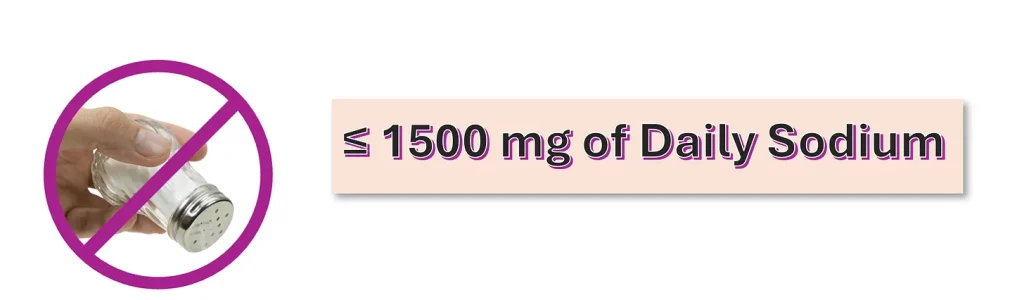
One teaspoon of salt contains 2,300 mg of sodium. But the largest amount of sodium comes from processed, packaged and restaurant foods.
Be careful with salt substitutes. Many contain potassium, which may be dangerous for some patients, especially those with kidney disease.
Daily Weights
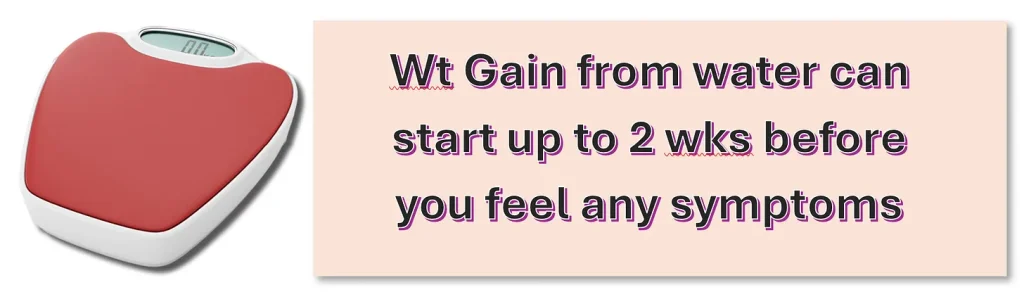
Daily weight is one of the most important tools you have at home. Fluid weight can increase before you feel very short of breath. That means the scale may warn you early. You should weigh yourself every day, preferably every morning after urinating and before eating and drinking. Keep a journal of these weights. If your weight increase by 2-3 lbs in one day or 5 lbs over a week, then this likely due to fluid retention and your doctor may want to adjust your diuretic dosing.
Daily weights can prevent hospitalizations because they help catch fluid buildup early.
Dieting / Exercising / Quitting Tobacco
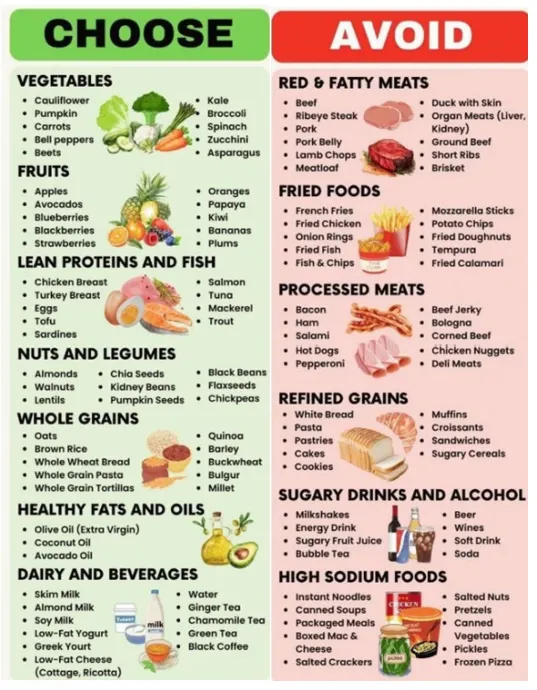
Adhering to a heart healthy diet is critical in promoting recovery in heart failure. In general you should avoid foods which could cause inflammation and instead adhere to ones which nourish your body. In general, you should avoid processed meat, refined carbs, fried foods, fast foods and soft drinks.
Staying active by exercising regularly and quitting smoking are both highly encouraged. Walking is often a good place to start, but the right amount depends on your condition. Being involved in supervised exercise activity in a cardiac rehab program has been shown to be tremendously beneficial.
Treatment
Once HF has been diagnosed, the type of treatment differs based on whether you have systolic heart failure (HFrEF) or diastolic heart failure (HFpEF). Patients are often shocked by the number of medications which cardiologists attempt to introduce. However, we view the therapies as recipe or cookbook, where if one ingredient is missing then the chances of success is hampered.
Diuretics: These drugs are given in both systolic & diastolic HF for symptomatic benefit only. They do not help patients live longer over the long term. However, diuretics are often necessary to prevent water and salt build up. They act on the kidneys to remove extra sodium and water so that you can breathe better & have less ankle swelling. Diuretics are typically given as tablets, however there are under the skin injectables using an on-body device which can be considered for some.
Systolic HF
There are 4 pillars to be observed in treating HFrEF and by targeting different receptors we can achieve reverse remodeling of the heart muscle. Each medicine has a different job. Studies show that a large majority of patients are not able to keep up with the multi drug regimen, however you should do your best to stay with the titration schedule of these medications.
Beta Blockers: These slow the heart rate, lower blood pressure and can help improve the pumping strength of the heart muscle over time.
ARNI / ACE inhibitors: These relax blood vessels, lower blood pressure, and reduce stress on the heart. An ARNI is a newer type of medication which is particularly effective in recovering heart function
Mineralocorticoid receptor antagonists (MRA): These protect the heart by blocking a hormone which causes salt & water retention. It is a type of diuretic.
SGLT2 inhibitors: These were first used for diabetes. However, they have been found to be particularly effective in treating both systolic and diastolic heart failure & can be given in patients who do not even have diabetes. They reduce HF hospitalizations, help symptoms and have a mortality benefit.

Diastolic HF
For many years we had no effective therapies for HFpEF, as we eventually found out that the disease process was not only limited to the heart itself & was in fact part of a wider systemic pathology (involving an interplay with the kidneys, blood vessels and neural/hormonal mechanisms). Lately a few therapies have been found with promising results. These include:
SGLT 2 Inhibitors (dapagliflozin)
Mineralocorticoid receptor antagonists (MRA)
Spironolactone. Finerenone (nonsteroidal MRA) (significantly lower rate of a composite of total worsening HF events and death from CV disease)
ARNI
Sacubitril/Valsartan did not meet clinical significance, but there was a signal of benefit in some subgroups.
GLP 1 Agonists
By inducing weight loss, these incretin mimetics have demonstrated a cardiac mortality benefit (e.g. Semaglutide, Liraglutide etc.)
Dose adjustments are usually made every 2 weeks or so and routine blood work is often required to ensure that your potassium/sodium levels and kidney function are coping appropriately with the changes.
It is important that you do not stop or change the dose of your medications without first speaking with your provider. Drug interactions can occur, so it is a good idea to ask your doctor if any of the drugs could cause problems when combined with whatever medications you are already on at home. If you feel any side effects of dizziness, weakness or low blood pressure, often your doctor can adjust the dosages easily and safely.
Device therapy
In some advanced cases of HF which have proven refractory to medical treatment, patients may need an ICD (defibrillator) to rescue them from any potentially dangerous rhythms. Others require valve procedures or palliative specialized infusions via a pump. In very advanced stages some patients may require an external mechanical pump (LVAD) or even a heart transplant. These however represent the minority of case and with proper care many usually recover.
Integrative & Regenerative Therapies:
There is some evidence in the literature which suggest several non-traditional therapies being beneficial in treating systolic heart failure. There are several case series showing improvement even in patients with more advanced forms of heart failure. However, it must be emphasized that the therapies below have not been formally endorsed in the AHA Heart Failure Guidelines:
- External Counterpulsation Therapy
- Infrared sauna therapy
- Intravenous Ozone Therapy
- L- Citrulline
- Vitamin D3
- Intravenous Methylene Blue
Final Thoughts
A diagnosis of heart failure can feel scary. But it is not the end of the story. It is the beginning of a new chapter where understanding your body becomes powerful. Many overcome their condition and reclaim fulfilling and productive lives. Have faith and know that you can do the same!
References:
Heidenreich PA, et al. 2022 AHA/ACC/HFSA guideline for the management of heart failure: a report of the American College of Cardiology/American Heart Association Joint Committee on Clinical Practice Guidelines. Circulation. 2022
chrome-extension://efaidnbmnnnibpcajpcglclefindmkaj/https://www.heart.org/-/media/Files/Health-Topics/Heart-Failure/Living-With-HF-Guide.pdf?sc_lang=en
https://www.ahajournals.org/doi/10.1161/CIR.0000000000001110#F1
chrome-extension://efaidnbmnnnibpcajpcglclefindmkaj/https://hartfordhealthcare.org/File%20Library/Services/PDFs/HHC-Heart-Failure-Guide.pdf