
There are many diets which have been proposed to lose weight and achieve a heart healthy lifestyle. We are constantly bombarded with fad diets promising quick weight loss in record times. However, many of these diets such as the cabbage soup diet, Atkin’s diet, Paleo and keto diets are hard to maintain and many often rebound.
I will explore 3 modern day diets and show how they not only help in reducing abdominal fat, but also demonstrate the benefits of reducing heart disease, diabetes, cancer & death. These diets include:
- Mediterranean
- Intermittent Fasting
- Plant Based
In the end I will show you why I believe a combination of the Mediterranean diet & Time Restricted Eating, which some call Mediterranean Fasting, is probably the best approach to a heart healthy lifestyle.
In general, healthy dietary patterns contain primarily vegetables, fruits, whole grains, healthy sources of protein, non-tropical plant oils and minimally processed foods.
Mediterranean Diet
It was noted in Greece, Italy & other Blue Zones, that these persons with a diet predominantly consisting of fruits, vegetables & whole grains displayed lower rates of chronic disease & had higher than average life expectancy.
The Mediterranean Diet (MD) is not necessarily a diet per say and more so represents a way of living. It doesn’t advise removing any particular food group completely and there is no need to count calories. It is a high fiber, plant-based eating plan promoting daily consumption of whole grain, green leafy vegetables, legumes, nuts and seeds. While allowing for a glass or two of wine.
The MD is often considered the goal standard for cardiovascular health. Studies have shown a 23% lower risk of all-cause mortality, 27% lower risk of cardiovascular mortality & 50-70% lower risk of recurrent heart disease. It reduces cognitive decline and the risk of breast as well as prostate cancer.
Adherence has been linked with reductions in blood pressure, improved lipid profiles (↓ LDL), better insulin sensitivity, decreased inflammation & improved blood vessel function.

Particular recommendations include:
- Choosing Fish / Seafood
o Eat > 2-3 times / week
o Salmon, sardine, trout, herring, mackerel & anchovies
o Shrimp, lobster, oyster
- Daily servings of Whole Grain, Fruits & Veges
o Eat Veges ≥ 3 servings /day
o Have Fresh fruit ≥ 2 servings / day
o Daily servings of whole grain, tree nuts, pasta & beans
o Aim for a Carb-to-Fiber ratio of < 7 for processed grains
- Emphasizing Unsaturated Fats
o Reduce saturated fats from animal products
o Minimizing meat, dairy & poultry
o Try to avoid processed meats & red meat
o White meat / Poultry allowed 1-2 x / week
o Eggs < 5 yolks / week
o Red meat (≤ 1 time/ week), Butter & Sweets are best 1-2 x month (or preferably none at all)
Olive oil is a cornerstone of the MD & is recommended at 4 tablespoons per day, preferably uncooked. It is rich in monounsaturated fat, primarily oleic acid. These fats are easily metabolized and can serve as a readily available source of energy during fasting. Additionally, olive oil contains antioxidants & anti-inflammatory compounds which support metabolic health. Extra virgin olive oil is best.
Foods to Limit:
Nothing is strictly off limits on the Mediterranean plan, but there are certain foods which are higher in saturated fats, refined flours & simple carbs which should be put in the “once in a while” list. These include:

Acceptable Snacks:
- Roasted chickpeas
- Hummus with baby carrots / cucumbers
- Salsa with Jicama sticks
- Pistachios, walnuts, frozen grapes/blue berries, dried apricots
- Avocado or Tuna on Whole grain crackers
- Greek yogurt with walnuts & berries
- Small square of dark chocolate (>70% cocoa) paired with figs/dates
- Grapes with fetta cheese
Intermittent Fasting
The idea behind Intermittent Fasting (IF) is that it encourages the body to access & burn through its fat stores by creating a calorie deficit. We have been conditioned to eat continuously throughout the day with multiple unhealthy snacks in between meals. Excess glucose is not wasted. It’s converted to glycogen (a storage form of glucose) or fatty acids and stored in our fat cells.
Insulin Resistance / Sensitivity
With continuous carbohydrate consumption, our insulin blood levels rise. Normally, as serum glucose levels increase, insulin is secreted by the pancreas, which in turn opens glucose channels, allowing sugars to enter the cell. With constant eating, blood insulin levels remain persistently high. These elevated insulin levels promote insulin resistance, where muscle, fat, blood vessel, and liver cells become less responsive to insulin’s signal. Excess intracellular fat contributes to this impaired response. High insulin serum levels protect fat stores by promoting fat formation through lipogenesis. It drives our cells to preferentially use readily available glucose for energy. Additionally, the elevated blood insulin reduces nitric oxide (natural vasodilator) production resulting in stiffer blood vessels. Many with this pattern become prediabetic and hypertensive which go unrecognized for years.
Benefits of Fasting
IF encourages the body to shift from using glucose as the primary energy source to utilizing stored fat. With fasting, insulin levels drop and this enables energy stored in glycogen & fat stores to be mobilized. In the absence of insulin, the body’s need for energy stimulates gluconeogenesis in the liver. That is, stored glycogen is broken down to glucose. Once that has been metabolized, then lipolysis is triggered and fatty acids are released from fat. These fatty acids go to the liver to be oxidized in mitochondria to form ketones (a byproduct of fat breakdown). It is these ketones that we want our cells to utilize for energy while in the fasting state. Fasting triggers cellular rejuvenation through ‘autophagy’ and promotes growth hormone production which aids in muscle tone and metabolic health.
Time restricted eating patterns (TRE)
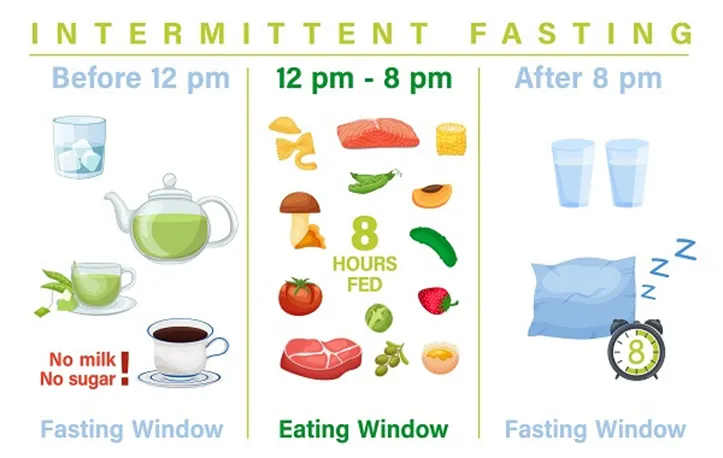
The common forms of cyclic fasting involve eating in a smaller time restricted window followed by a prolonged fast. That is, eating in a 10 hour or 8 hour window for example. Here are the methods:
16:8 method
- Fast for 16 hrs and eat all meals in an 8 hr window each day
- Example eating from 10 am – 6 pm
- By avoiding late night eating, we are less likely to store excess calories and avoid weight gain
5:2 method
- Here there are 5 days of eating normally
- Followed by 2 days of either whole day fasting, or reducing caloric intake to 500-600 calories (i.e. a 25% reduction in caloric needs)
Alternate Day & Prolonged Fast
- Alternate between a fasting day & a regular eating day
- For example; one can consume very few calories (or none) on Tue then eat normally on Wed
- Abstain from food for 3 – 7 days to extend metabolic benefits
While fasting, one can drink water, black coffee (no milk), unsweetened tea & seltzer.
Plant Based Vegetarian Diet
Removing or limiting meat reduces the intake of saturated fats & dietary cholesterol. Vegetarian & pescetarian diets lower systemic inflammation, improve insulin sensitivity and are associated with lower BMI.
In a 1990 study, investigators randomized 48 persons with chronic coronary artery disease to assess the effects of lifestyle and plant based dietary changes. The intervention group adhered to a vegetarian diet and had lifestyle support while the control group received usual care from physicians. At the end of 5 years, the intervention group had regression in their coronary stenosis, while those who received usual care had progression of their coronary artery disease. The latter also had more cardiac events. Other studies have found that 34% more patients on a plant based diet had reduction of atherosclerosis than those on a former diet recommended by the American heart Association.
Regular consumption of vegetables, fruit and whole grain lowers the risk of coronary heart disease, stroke, colon cancer, type 2 diabetes, hypertension & metabolic syndrome. Studies have even shown that a vegan diet can lower cholesterol levels (including LDL) to almost a similar degree as a statin.
There is no need to worry about adequate protein intake for most people. Only 10% – 35% of daily calorie intake needs to be from protein. This can be easily achieved by having staples such as brown rice, quinoa & beans.
So what can I eat in this plant based revolution?

Conclusion
I know it is hard to stick with a heart healthy diet and even though I am a cardiologist, like you, I have struggled to improve my dietary patterns. After reviewing many of the current diets out there, my recommendation is for most to implement a combination of the Mediterranean Diet and Intermittent Fasting patterns. Some call this Mediterranean Fasting.
To get the ball rolling, start off with baby steps. You can begin with a 10 – 12 hr eating window followed by fasting for the rest of the day. People have seen benefits from just doing this alone and eating whatever they want. As you become more accustomed, you can narrow your eating window down to 8 hrs and then work towards fasting for 1-3 days on occasion.
Whenever it is time to eat, include lots of vegetables and lean more towards plant based options. Minimize red meats and limit processed foods. Keep your insulin levels low by not snacking in between meals and work towards eating at most 1 -2 meals per day.
Balance is essential, so make sure to obtain at least 150 minutes of moderate intensity exercise per week and drink around 11-15 cups (~3-4L) of water per day.
If you slip up, do not be hard on yourself. Be encouraged and know that this is a gradual journey and not a sprint. I know you can do it!
Disclaimer: This article is not meant to be official medical advice and excludes certain medical conditions. The above eating patterns should be discussed with your doctor. One should exercise caution with prolonged fasting in brittle diabetics, pregnant females and nursing mothers.
References:
chrome-extension://efaidnbmnnnibpcajpcglclefindmkaj/https://www.columbia.edu/itc/hs/medical/cp4/client_edit/topic4/sg3a.pdf
https://pmc.ncbi.nlm.nih.gov/articles/PMC8210981/#sec11